Making Bathrooms Safer for Independence
Slips, trips, and falls in the bathroom can lead to serious injuries for anyone, but bathrooms are one of the most high-risk spaces in any home with older adults. Many accidents are preventable with thoughtful design and simple modifications.
This guide covers practical renovation options, including cost considerations, and funding resources. While intended for seniors, their family members, and caregivers, these suggestions apply to all those looking to create safer, more functional bathrooms. This could be through small adjustments or a whole room reno. By planning carefully, it is possible to improve safety, and keep your comfort, style, and home value intact.
Why Accessible Bathrooms Matter
Bathrooms may not be the largest room in your home, but they certainly pose big risks – slippery surfaces, high tubs, low toilets, and narrow spaces can turn routine tasks into moments of potential danger. For older adults, even the smallest slip can lead to serious injury, hospital visits, or loss of confidence.
Age-related changes which no one can avoid forever increase these risks:
- Balance, strength, and flexibility can decline gradually,
- Vision may be affected by low light or contrast sensitivity, and
- Medications can sometimes cause dizziness or fatigue.
These shifts do not make a bathroom inherently unsafe, but they could increase your chances.
National data highlights the stakes! Falls are the leading cause of injury-related hospitalizations among Canadians aged 65 and older, with bathrooms accounting for a significant portion of incidents. Roughly 1 in 4 seniors in Ottawa live alone, meaning a bathroom accident could have serious consequences before local help arrives.
An accessible bathroom is about safety and supporting independence, dignity, and daily comfort, all-the-while reducing risks, improving functionality, and maintaining a quality of life that allows seniors to continue living confidently in their own homes.
Key Principles of Accessible Bathroom Design
Creating is about making the space safe, usable, and adaptable for everyone. Most renovations keep your comfort and style intact, but focus on 3 core principles: visibility, stability, and ease of movement. These principles of design address the biggest risks and safety concerns, while making sure renovations consider long-term usability that help seniors and caregivers feel confident in their independence.
1. Clear, unobstructed paths
Wide doorways, open floor space, and thoughtfully arranged fixtures reduce the chance of trips and allow easy movement for walkers or wheelchairs.
2. Stable surfaces and support
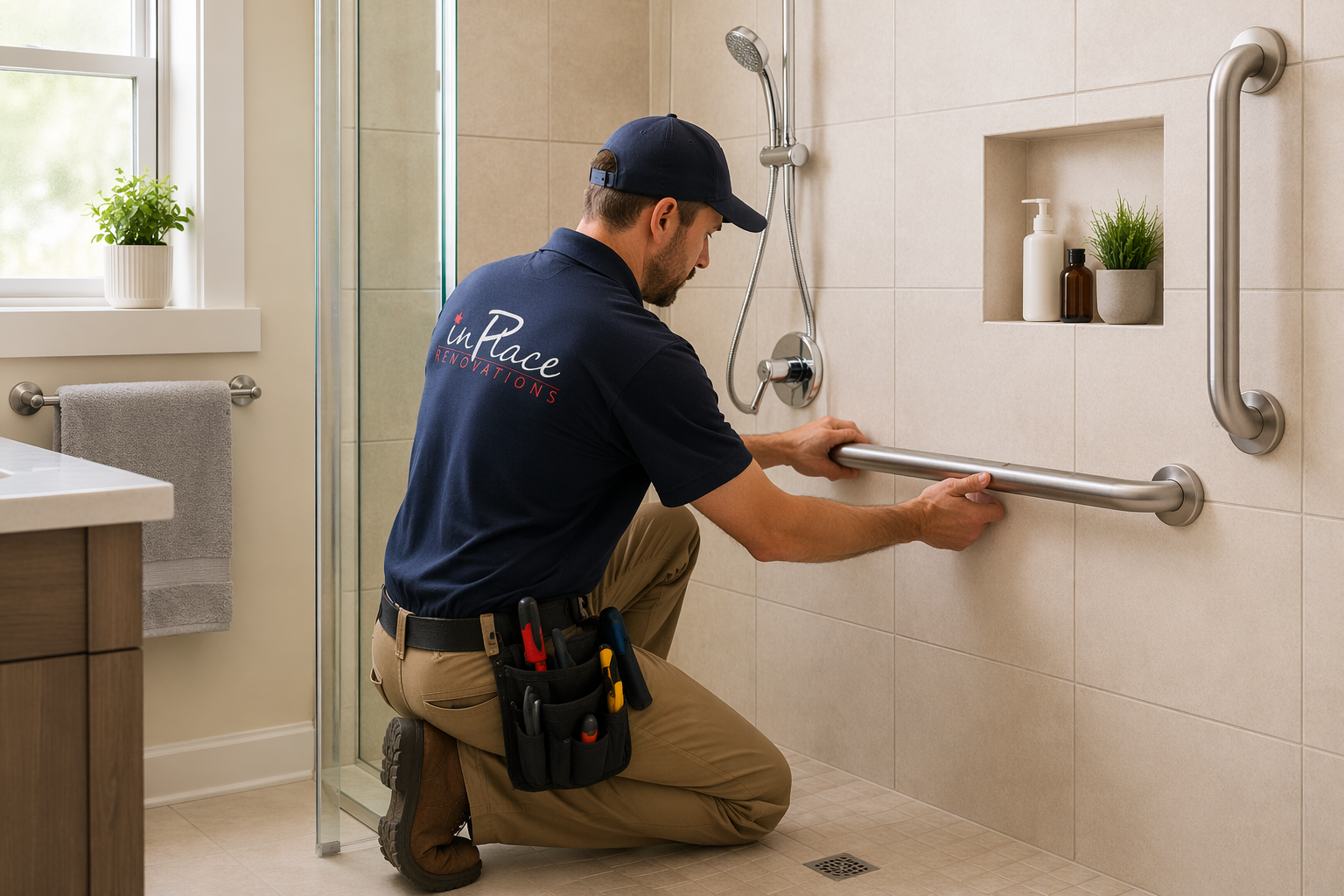
Non-slip flooring, grab bars near toilets and showers, and sturdy shower seats provide the stability needed to prevent falls. Placement matters: bars should support natural movement and be reachable without stretching or bending.
3. Proper height and reach
Adjusting the height of toilets, sinks, and counters helps reduce awkward bending or stretching, which can cause slips or strain. Even small adjustments—like a raised toilet seat or a lower countertop—can improve safety and comfort.
4. Adequate lighting
Bright, even lighting, especially near entrances, mirrors, and shower areas, helps prevent missteps. Nightlights or motion-sensor lights are particularly helpful for nighttime use.
5. Adaptability for future needs
Bathrooms should allow for future upgrades or equipment, such as walk-in tubs, roll-in showers, or additional support rails, without major reconstruction.
Accessible Bathroom Upgrades, Costs & Funding Supports
Making a bathroom more accessible can range from small safety upgrades to full-scale renovations that support long‑term independence. In Ontario, multiple funding options help reduce out‑of‑pocket costs.
Below, we have compiled a cost‑focused guide linking ‘what to do?’, ‘why it matters?’, how much are typical costs in Ontario?’, and ‘which funding programs can help?’.
Basic upgrades: Immediate Safety and Low‑Cost
These upgrades provide clear safety benefits with modest cost and minimal effort.
Many qualify for funding under programs like Ontario Renovates (Provincial via Municipality [City of Ottawa]), the Home Accessibility Tax Credit (HATC – Federal), and sometimes Home & Vehicle Modification Program (HVMP) if disability‑related criteria are met.
| Upgrade | Purpose & Impact | Typical Cost (Ontario) | Funding Options |
| Grab bars & support rails | Stabilizes transfers in showers, tubs, toilets | $250 – $400+ per bar installed | HATC, Ontario Renovates |
| Non‑slip flooring or coatings | Reduces slip risk on wet surfaces | Variable (material + install) | HATC, Ontario Renovates |
| Comfort‑height or raised toilet seat | Eases sit‑to‑stand motions | Moderate | HATC |
| Improved lighting or motion sensors | Better visibility | Moderate | HATC |
| Handheld showerhead & shower seat | Safer seated bathing | Low–moderate | HATC, Ontario Renovates |
Moderate Renovations with Greater Accessibility
These involve construction work to improve usability. Costs vary by home layout and contractor rates. Ontario cost ranges below are based on regional contractor estimates (Ottawa area) and accessible renovation pricing guides.
| Upgrade | Purpose & Impact | Typical Cost (Ontario) | Funding Options |
| Low‑threshold / walk‑in shower base | Removes high step‑overs for safer access; significantly reduces risk for people with mobility challenges. | $2,000 – $3,500+ | HATC, Ontario Renovates, HVMP |
| Partial doorway widening | Improves access for walkers or narrow wheelchairs; supports future assistive device use. | $300 – $2,500+ | HATC, Ontario Renovates |
| Slip‑resistant tile or vinyl flooring | Permanent surface upgrade; effective and often covered by renovation programs | Variable | HATC, Ontario Renovates |
Note: Where plumbing or structural changes are involved, a building permit may be required under the Ontario Building Code.
Which brings us to…
Full Accessible Bathroom Renovation
This tier reflects larger redesigns that provide long‑term independence and adaptability, including roll‑in showers or complete layout changes. These are often coordinated by licensed professionals.
| Upgrade | Purpose & Impact | Typical Cost (Ontario) | Funding Options |
| Roll‑in shower (no curb) | Full wheelchair or walker access | $5,000 – $15,000+ | HATC, Ontario Renovates, HVMP |
| Full layout reconfiguration | Improves space flow for mobility devices or future needs; provides a future‑friendly bathroom that can adapt to changing abilities. | $15,000 – $30,000+ | HATC, Ontario Renovates, HVMP |
| Combination accessibility upgrades | Custom solutions tailored to long‑term needs; best for seniors with evolving mobility needs or those planning long-term, or for aging-in-place. | $20,000 – $50,000+ | HATC, Ontario Renovates, HVMP |
Funding & Financial Support Options for Accessible Bathroom Renovations (Ontario)
Accessible bathroom renovations can make a big difference in safety and independence, but they do involve cost. The good news is that seniors in Ontario have access to multiple funding supports — federal, provincial/municipal, and nonprofit — that can help make accessible upgrades more affordable.
This section explains the major programs, how they work, and how much support you might realistically receive.
Ontario Municipal/Provincial Support: Ontario Renovates
The Ontario Renovates Program is delivered locally by municipalities using provincial funding.
What it helps with
- Grants or interest‑free loans for accessibility upgrades, including:
- Roll‑in or low‑threshold showers
- Grab bars and support rails
- Doorway widening
- Toilet and sink adjustments
- Non‑slip flooring
Typical support
- Funding often ranges from about $15,000 to $25,000+, but exact amounts depend on your municipality’s budget and prioritization.
Who qualifies
- Homeowners with low to moderate income (income‑tested).
- Eligibility and income thresholds are set by local housing offices (called “service managers”), so amounts and criteria vary.
How to apply
- Contact your local municipal housing services office (e.g., City of Ottawa Housing Services).
- Complete an application showing income and renovation plan.
- Submit contractor quotes and project scope.
Pro tip: Ontario Renovates can cover a significant portion of renovation costs up front — making larger projects much more feasible.
Support for Disability‑Related Modifications: HVMP
The Home & Vehicle Modification Program (HVMP) is delivered by March of Dimes Canada with provincial support.
What it covers
- Accessibility renovations for people with long‑term mobility disabilities, including:
- Roll‑in showers
- Grab bars and rails
- Widened doorways
- Support structures
Funding amount
- A lifetime maximum of up to $15,000 per household.
Eligibility
- Requires documentation of long‑term mobility disability (letter from a physician/therapist).
Why it’s great: You can use HVMP funding in conjunction with other programs like Ontario Renovates or HATC to cover different parts of the project.
Federal Support: Home Accessibility Tax Credit (HATC)
The Home Accessibility Tax Credit is one of the most widely used sources of support for bathroom renovations that improve safety and mobility.
How it works
- It’s a non‑refundable federal tax credit on your income tax return.
- You can claim up to $10,000 in eligible renovation expenses per tax year.
- Eligible expenses include installed grab bars, widened doorways, non‑slip flooring, walk‑in showers, etc.
Financial impact
- At the federal rate of 15 %, a **$10,000 claim could reduce your taxes by up to about $1,500.
- Example: If you spent $8,000 on a walk‑in shower and grab bars, you could potentially get ~$1,200 back when you file your taxes.
Requirements
- Renovations must be in your principal residence and designed to improve accessibility or safety.
Claiming tip: Keep detailed receipts and invoices, including labor and materials for each renovation item.
Tips to Maximize Funding and Reduce Out‑of‑Pocket Costs
1. Stack supports when possible
You can often use multiple programs together — for example:
- Use Ontario Renovates funding for the bulk of renovation costs,
- Claim eligible renovation costs under HATC when filing taxes,
- Use HVMP for specific disability‑related elements.
Just be careful not to claim the same expense twice under two different tax credits.
2. Document everything
Keep all invoices, contractor quotes, before/after photos, and receipts. Most programs require documentation to prove eligibility.
3. Apply early
Municipal programs (like Ontario Renovates) can have limited funds or annual caps — applying early improves your chance of receiving support.
4. Know what counts
For tax credits like HATC, both labor and materials for eligible accessibility renovations count toward your claim.
Example Funding Pathways (Real Ontario Scenarios)
Scenario 1: Moderate Renovation
- Install a low‑threshold walk‑in shower and grab bars.
- Use Ontario Renovates to cover most renovation costs.
- Claim eligible costs under HATC on your tax return.
Scenario 2: Disability‑Related Upgrade
- Need a roll‑in shower and doorway widening due to mobility limitations.
- Apply for HVMP (up to $15,000).
- Use Ontario Renovates or municipal supports for additional renovation costs.
- Claim remaining eligible expenses with HATC.
Need to know more about Ontario Renovates vs HATC? Check out our Compare & Contrast to help navigate your options. [Note: Link to 1.2 ONREN vs HATC]
Your Practical Summary – Ontario Funding & Support Programs
The table below aligns funding sources with common renovation choices to help readers immediately see what help is available.
| Funding Source | Eligible Expenses | Maximum Support | Notes |
| Home Accessibility Tax Credit (HATC) | Renovations that improve accessibility | Up to $10,000/year claimed | Federal tax credit (e.g., up to ~$1,500 back) |
| Ontario Renovates Program | Accessibility and safety upgrades | ~$15,000 – $25,000+ (income‑based) | Administered by municipalities (apply locally) |
| Home & Vehicle Modification Program (HVMP) | Mobility‑related renovations | Up to $15,000 (lifetime) | Requires documentation of long‑term mobility challenges |
| City/Municipal Seniors’ Programs (see below). | Small grants or assistance | Varies by location | Check local offices (Ottawa, Toronto, etc.) |
| Private Insurance | Renovation or equipment cost support | Varies | Coverage depends on plan type |
| Veterans Affairs Canada (see below). | Home modification support | Varies | For eligible veterans |
Additional Funding Sources & Supports to Explore (A-Z)
The following programs don’t always directly pay for renovation labor, but they help offset costs or provide equipment that supports safety:
Assistive Devices Program (ADP)
- Provides partial support for equipment (e.g., shower seats, portable grab bars) for people eligible under disability criteria.
Canada Mortgage and Housing Corporation (CMHC) Initiatives
- Some low‑income homeowner grants or supports may include accessibility elements (varies by year and region).
Municipal Seniors’ Safety Grants
- Some cities or community organizations run small grants or forgivable loans for seniors’ home safety upgrades. Contact local senior services offices for current offerings.
Veterans Affairs Canada
- Eligible Canadian veterans may receive funding for home modifications that improve accessibility and safety.
Programs, Resources & Helpful Links
Government Programs & Tax Credits
Canada Revenue Agency — Home Accessibility Tax Credit (HATC)
Official CRA page explaining eligibility and how to claim the federal tax credit for accessibility renovations.
https://www.canada.ca/en/revenue-agency/services/tax/individuals/topics/about-your-tax-return/tax-return/completing-a-tax-return/deductions-credits-expenses/line-31285-home-accessibility-expenses.html
Ontario.ca — Home and Vehicle Modification Program (HVMP)
Ministry of Seniors and Accessibility page on the HVMP for eligible home modifications (e.g., roll‑in showers, widened doors, grab bars) for people with long‑term mobility restrictions.
Ontario Renovates (Find Your Local Service Manager)
Official gateway to the Ontario Renovates program. Municipal housing offices administer local funding for accessibility upgrades; clicking through will help you find your local contact.
https://www.ontario.ca/page/find-your-local-service-manager
Ontario Renovates — City of London (example municipal page)
Shows how Ontario Renovates is implemented in specific regions, with details on grants and loans for accessibility renovations.
https://london.ca/living-london/building-renovating/ontario-renovates
(Tip: Use the “Find Your Local Service Manager” link above to find your own municipality’s Ontario Renovates office.)
Ontario.ca — Assistive Devices Program (ADP)
Government overview of the Assistive Devices Program, which helps cover customized equipment that supports mobility and daily living (e.g., grab bars, raised toilet seats) for Ontario residents with long‑term physical disabilities.
Nonprofit & Support Organization Links
March of Dimes Canada — Home & Vehicle Modification Program (HVMP)
Official March of Dimes Canada page on the Home & Vehicle Modification Program, including details on what modifications and devices are eligible.
https://www.marchofdimes.ca/en-ca/programs/am/hvmp/Pages/HVMP-Funding.aspx
(March of Dimes also has broader accessibility support info linked here: https://www.marchofdimes.ca/en-ca/programs/am/Pages/defaultold.aspx)
Helpful Resources
Ontario.ca — Accessibility in Ontario Overview
General information about accessibility, the Ontario Building Code, and related supports; includes note about financial support programs including HVMP.
https://www.ontario.ca/page/accessibility-ontario-what-you-need-to-know
Ontario.ca — Guide to Programs and Services for Seniors (PDF)
Comprehensive provincial guide to programs for older adults in Ontario, including home modification and tax credits context.
https://www.ontario.ca/files/2024-11/msaa-guide-to-programs-services-for-seniors-fall-en-2024-11-27.pdf