Fall Prevention Starts at Home
Most older adults want to stay in their own homes as they age. In Ottawa, where one in six residents was over 65 in 2021—and projections suggest that by 2030, one in five adults will be a senior. This means creating home environments that support independence and safety is more important than ever.
Aging-in-place allows seniors to maintain comfort, familiarity, and dignity, but it also comes with some unique challenges. Many homes were not designed with older adults’ changing mobility, vision, or strength in mind, and everyday features can go unnoticed and become hazards over time.
Falls are one of the most common causes of injury among older adults, and half of fall-related hospitalizations occur inside the home. Yet these accidents are rarely a result of extreme situations. Falls often happen in familiar, everyday spaces: a dim hallway, a loose rug, or a step taken at night without enough visibility. As balance, strength, reaction time, or sight change, ordinary features of a traditional home can pose unexpected risks.
This checklist is intended to help seniors, family members, and caregivers spot those risks before they lead to injury. It is practical, non-medical, and focused on real living environments, not clinical settings.
The goal is to help home remain a safe, comfortable place to live independently. By paying attention to how each room supports movement, simple, yet thoughtful changes can make a big difference in confidence, safety, and everyday independence.
Why Falls at Home Are So Common for Older Adults
For many older adults, falls happen when normal age-related changes meet everyday home environments that weren’t designed for them. Shifts in balance, depth perception, reaction time, or muscle strength can turn ordinary spaces—like narrow hallways, cluttered living areas, or steep stairs—into situations where a misstep has serious consequences.
Age-related changes that affect safety:
- Vision may decline, reducing contrast sensitivity or making it harder to adjust to low light.
- Medications—especially for blood pressure, sleep, pain, or anxiety—can increase dizziness, fatigue, or momentary disorientation.
- Muscle strength and reaction time naturally decrease, reducing the margin for error during routine movements.
Home design challenges:
Most homes were built for younger, able-bodied occupants. Narrow hallways, dim lighting, slippery bathroom surfaces, uneven thresholds, and steep stairs are common features, especially in older housing stock. These design choices assume quick reflexes, strong grip strength, and stable balance; assumptions that may no longer hold true later in life.
Small, seemingly minor hazards combine with routine activities to create significant risk. Reaching for a light switch at night, stepping over a threshold, carrying laundry downstairs, or navigating a familiar bathroom can all become moments where the slightest misstep can lead to a serious injury.
National and local perspective:
National data reflect this pattern: falls are the leading cause of injury-related hospitalizations among Canadians aged 65 and older, with over 78,000 admissions each year—and about half of these occur inside the home (Public Health Agency of Canada, 2023; CIHI).
In Ottawa, where roughly 1 in 4 lives alone, where even a minor fall can have serious consequences, highlighting the importance of proactive home safety measures (City of Ottawa, 2021 Census).
These findings underscore a critical point: fall prevention starts with everyday spaces used at home. Addressing common risks with room-by-room assessments can reduce injuries and help older adults stay safe and confident in their homes.
How to Use This Checklist
Note: This checklist is not about major renovations or turning a home into a medical environment.
This checklist is intended for seniors, family members, or caregivers to identify common risks and take simple, realistic steps to reduce them without expensive equipment or large-scale renovations.
Most fall risks can be addressed with small, practical changes that make everyday spaces easier and safer to navigate by shaping a home that supports independence, confidence, and daily routines. Thoughtful adjustments to familiar spaces can truly make a meaningful difference.
Before walking through each room, it is important to set expectations.
Focus on three main areas in every room:
1. Visibility – Can you see potential hazards clearly in the day and at night?
2. Stability – Are surfaces, furniture, and railings secure enough to support safe movement?
3. Clear movement paths – Can you walk from place to place without tripping, stretching, or twisting awkwardly?
- When inspecting a room, look for:
- Tripping hazards such as loose rugs or cluttered walkways
- Poor lighting or glare that makes steps and edges hard to see
- Slippery surfaces, including tile or wet floors
- Awkward or far reaches, bends, or steps that could cause a misstep
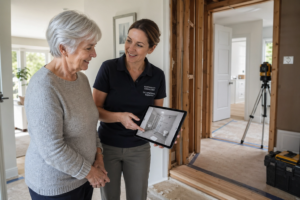
If you notice multiple risks across several rooms, that may be a sign that a personalized assessment—for example, with an occupational therapist—could provide tailored guidance for creating a safer home.
Entryways & Hallways
Entryways and hallways are high-risk areas because they’re transition spaces. Lighting changes, outdoor conditions, and the need to multitask (keys, bags, shoes, coats) all increase the chance of a misstep. These areas are used multiple times a day, often when people are tired, distracted, or in a hurry.
Addressing entryway and hallway hazards early can prevent falls before they happen. Often, simple changes make coming & going much safer and much less stressful.
Lighting at entrances
Poor lighting makes it harder to judge steps, thresholds, and changes in floor level.
- Is the entrance well lit both inside and outside the door?
- Are light switches easy to reach as soon as you enter?
- Is there adequate lighting for early mornings, evenings, or winter months with reduced daylight?
Thresholds and uneven flooring
Small height changes at entrances are a common cause of trips, especially when carrying items.
- Are door thresholds raised, loose, or uneven?
- Are mats or rugs secured and lying flat?
- Do flooring materials change abruptly between spaces (for example, tile to wood)?
Stairs and railings
Stairs require balance, strength, and depth perception, making them especially risky without proper support.
- Do all stairs have sturdy handrails, ideally on both sides?
- Are steps clearly visible, with good contrast at the edge?
- Are stairs free of loose carpeting or worn treads?
Clutter and shoe storage
Hallways should function as clear movement paths, not storage areas.
- Are shoes, bags, and coats kept off the floor?
- Is there a stable place to sit while putting on or removing footwear?
Winter-specific risks (where relevant)
Wet floors and bulky footwear significantly increase fall risk during colder months.
- Is there a non-slip surface or mat at entrances to manage snow and water?
- Are frequently used winter items stored within easy reach to avoid bending or rushing?
Living Room & Common Areas
Living rooms and shared spaces often feel safe because they are familiar, but they account for many falls precisely because they are used so often. Everyday movements, like getting up from a chair, walking across the room, reaching for a light, can become risky when the space is not set up to support changing balance, strength, or vision.
Small adjustments in living and common areas can significantly reduce fall risk while preserving comfort and independence.
Area rugs and cords
Loose rugs and cords are among the most common tripping hazards in living spaces.
- Are area rugs secured with non-slip backing or removed entirely?
- Do rug edges lie flat without curling?
- Are electrical cords kept out of walking paths and not stretched across the room?
Furniture height and stability
Low or soft seating can increase fall risk by requiring more effort and balance to stand.
- Are chairs and sofas at a height that makes standing up easy?
- Do armrests provide support when sitting down or standing up?
- Is furniture stable and unlikely to shift when leaned on?
Clear walking paths
Walking paths should remain consistent and uncluttered, even when furniture is rearranged.
- Is there a clear, wide path through the room without obstacles?
- Are footstools, small tables, or decorative items placed out of walking routes?
Lighting levels (day vs. evening)
Changes in lighting throughout the day can make familiar spaces harder to navigate.
- Is the room evenly lit without glare or deep shadows?
- Are lamps positioned to reduce eye strain when reading or watching television?
- Is lighting sufficient in the evening when vision may be reduced?
Seating that supports safe standing
Supportive seating reduces strain and helps prevent loss of balance during transitions.
- Is there at least one chair designed for easy sit-to-stand movement?
- Can feet rest flat on the floor when seated?
- Is there space to pause and regain balance after standing?
Kitchen
The kitchen is one of the most active rooms in the home. It combines movement, carrying items, turning, reaching, and multitasking—all of which increase fall risk, especially when balance, strength, or reaction time has changed. Many kitchen falls happen during routine tasks, not emergencies.
Improving kitchen safety often requires small changes that make everyday tasks easier and safer without limiting independence.
Use this checklist to spot common risks.
Frequently used items within easy reach
Reducing the need to stretch or crouch lowers the risk of losing balance. Have you considered the following?:
- Are everyday items stored between waist and shoulder height?
- Is reaching above the head or bending low required for daily tasks?
- Are heavy items kept at mid-level rather than high shelves?
Non-slip flooring
Kitchen floors are more likely to become slippery due to water, grease, or food.
- Is the floor surface slip-resistant, especially near the sink and stove?
- Are mats secured with non-slip backing?
- Are spills cleaned promptly to avoid slick surfaces?
Step stools vs. safe alternatives
Climbing, even short distances, significantly increases fall risk.
- Is a step stool used regularly to reach cabinets?
- Does it have handholds and a stable base, or does it wobble?
- Are there safer alternatives, such as reorganizing storage or using pull-down shelves?
Lighting over work areas
Good task lighting helps prevent missteps and mistakes during food preparation.
- Is there focused lighting over counters, sinks, and cooking surfaces?
- Are shadows reduced when standing at work areas?
- Are light switches easy to reach when entering the kitchen?
Clear pathways between counters
Clear, predictable pathways reduce the risk of trips and sudden loss of balance.
- Are walkways wide enough to move safely without turning sideways?
- Are trash bins, carts, or stools kept out of walking paths?
- Is there space to move safely while carrying hot or heavy items?
Bathroom
The most high-risk room in any home!
Bathrooms combine water, hard surfaces, tight spaces, and frequent transitions between sitting, standing, and stepping. Because of this, even minor hazards can significantly increase fall risk.
The good news is that small, well-placed changes in bathrooms often have the biggest impact on safety. Targeted, practical changes here can dramatically reduce risk while preserving privacy and independence.
Tub and shower access
Transitions in and out of bathing areas are one of the most common moments for falls.
- Is stepping over a high tub wall required to bathe?
- Is there a stable surface to hold onto when entering or exiting?
- Is the shower or tub floor slip-resistant?
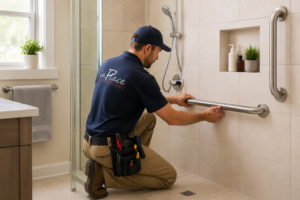
Grab bars (pay close attention to placement!)
Proper placement matters more than the number of bars installed. Bars can be installed too low to or far far away be effective during a fall.
- Are grab bars installed where weight is actually transferred, not just near the wall?
- Are they securely anchored into studs or appropriate supports?
- Are they positioned near the tub, shower, and toilet—not just one location?
Toilet height
Difficulty rising from the toilet is a common early sign of increased fall risk.
- Is the toilet low enough that standing up requires significant effort?
- Is rocking or pushing off nearby surfaces needed to stand?
- Would a comfort-height toilet or raised seat reduce strain and instability?
Flooring and bath mats
Unsecured mats are a frequent but preventable cause of slips.
- Is the bathroom floor slip-resistant, even when wet?
- Are bath mats secured with non-slip backing?
- Are loose rugs or towels kept off the floor?
Nighttime visibility
Falls often happen at night when visibility is low and balance is compromised.
- Is there a clear, well-lit path to the bathroom at night?
- Are nightlights installed and easy to turn on without bending?
- Are light switches accessible from the doorway or bedside?
Bedroom
Nighttime falls are very common. Bedrooms might feel safe, but many falls happen here. This is especially at night when vision is limited, balance is reduced, and people may move quickly to the bathroom. Simple adjustments can make a big difference.
A well-organized bedroom supports safer mobility and reduces nighttime falls, helping seniors maintain independence and confidence.
Bed height
- Is the bed at a comfortable height for sitting and standing without strain?
- Consider a bed 20–23 inches from the floor, or an adjustable bed for easier transfers.
Path to bathroom
- Is there a clear, unobstructed path from bed to bathroom?
- Remove clutter, cords, and furniture that could trip you.
Night lighting
- Are nightlights or motion-sensor lights installed along the path?
- Ensure lights are bright enough to see obstacles but not blinding.
Rugs and furniture edges
- Are rugs secured with non-slip backing?
- Are sharp corners or low furniture edges padded or relocated to reduce injury risk?
Easy access to essentials
- Keep glasses, phone, medications, and mobility aids (walker or cane) within easy reach.
- Avoid having to bend, stretch, or navigate obstacles in the dark.
Stairs (If Applicable)
Stairs are high-risk areas because a single misstep can lead to serious injury. Even short flights should be treated with care & caution.
Small stairway improvements, such as lighting, secure railings, and clutter-free steps, can dramatically reduce the chance of experiencing a fall.
Secure railings
- Are sturdy railings installed on both sides if possible?
- Railings should extend beyond the top and bottom steps for extra support.
Contrast strips on edges
- Do steps have visual contrast to highlight edges?
- Helps prevent misjudging step depth, especially in low light.
Lighting at top and bottom
- Are stairways well-lit, with switches accessible at both ends?
- Consider motion-sensor lights for added safety at night.
Carpet condition
- Is carpet secure, smooth, and free from loose edges or wrinkles?
- Loose carpeting or runners can cause trips.
Storage on stairs
- Are stairs free of clutter, shoes, or other items?
- Avoid using stairs as temporary storage—any object increases fall risk.
Outside the Home
Falls do not stop at the front door. The exterior of the home can present as many risks as the interior. Seniors often encounter uneven surfaces, poor lighting, and seasonal hazards that increase the likelihood of experiencing a fall.
Walkways and uneven surfaces
- Are paths level, smooth, and free from cracks or gaps?
- Repair or mark uneven areas to prevent trips.
Railings and steps
- Are outdoor stairs equipped with sturdy railings on both sides?
- Ensure steps are even and in good repair.
Lighting
- Is there adequate lighting for entrances, pathways, and patios?
- Motion-sensor lights can improve visibility at night.
Seasonal hazards
- Winter: snow, ice, and wet leaves can make surfaces slippery.
- Summer/Fall: wet leaves, moss, and uneven garden paths are risks.
- Keep walkways clear and use sand, salt, or mats where needed.
Storage for mobility aids
Making outdoors adjustments, including clearing paths, adding railings, or improving lighting, can significantly reduce fall risk and support independent living.
- Are walkers, canes, or wheelchairs stored nearby for easy access?
- Avoid leaving aids in cluttered or hard-to-reach areas.
When a Checklist Is Just Not Enough
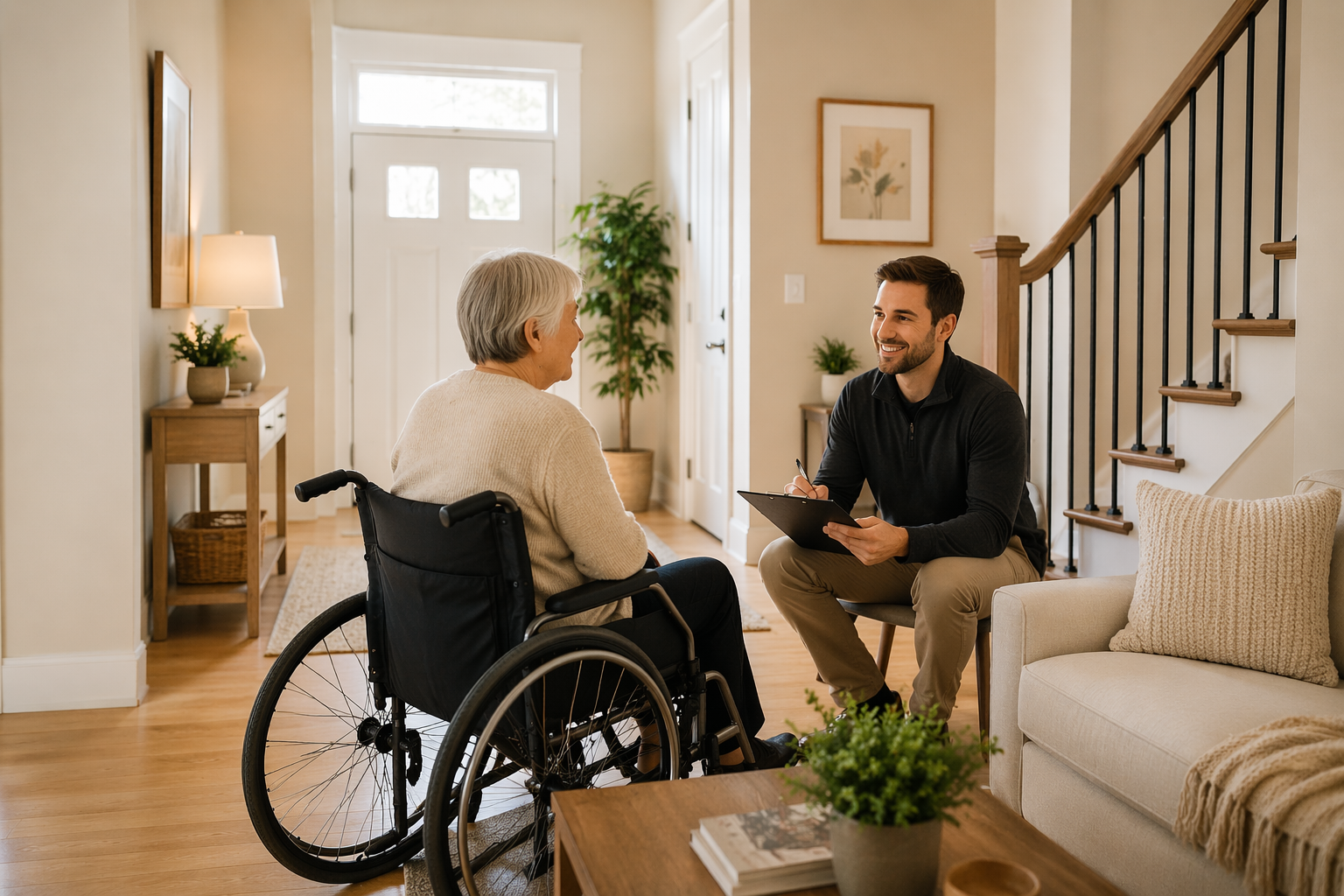
Signs a personalized assessment may help
Sometimes a general checklist is a great start—but not enough to fully reduce risks. Consider a professional evaluation if you notice:
- Recent fall or near-fall: Even a small trip can indicate underlying hazards.
- Fear of moving around the home: Hesitation or anxiety signals safety concerns.
- Multiple rooms flagged: If several areas show risks, broader solutions may be needed.
- Health or mobility changes: Vision loss, balance issues, or new medications can increase fall risk.
- Caregiver concerns: Feedback from family or aides can highlight unseen hazards.
Next steps:
- Occupational therapist (OT)-informed home safety assessments provide tailored recommendations.
- Proactive planning—rather than waiting for an injury—can prevent accidents and support long-term independence.
Turning Safety into Long-Term Stability
A checklist is just the starting point—true home safety grows from planning ahead. Key strategies include:
- Prioritizing changes over time: Tackle the most urgent hazards first, then plan gradual improvements.
- Balancing safety with comfort and independence: Make modifications that support mobility without making the home feel restrictive.
- Protecting home equity through smart, reversible upgrades: Choose solutions that improve safety while preserving long-term property value.
- Learning about grants, rebates, and tax credits: Explore programs like the Home Accessibility Tax Credit or Ontario Renovates to help fund improvements.
Conclusion
A Safer Home Supports Independence
Fall prevention is about removing limitations on freedom, it is about building confidence to move safely at home.
· Share the checklist: Involve family, caregivers, or friends in identifying risks.
· Revisit regularly: Update the checklist as mobility, health, or home conditions change.
· Seek guidance when needed: Professional assessments or OT-informed advice can provide tailored recommendations for long-term safety.
Canadian Institute for Health Information
Canadian national site with downloadable .PDF content for official hospitalization/fall statistics.
Hospitalizations, falls among seniors in Canada
Falls remain a leading cause of injury/hospitalization among older adults in Canada.
Seniors’ Falls in Canada: Second Report (PDF with national stats)
https://www.phac-aspc.gc.ca/seniors-aines/publications/public/injury-blessure/seniors_falls-chutes_aines/assets/pdf/seniors_falls-chutes_aines-eng.pdf
Surveillance report (fall hospitalizations & emergency department data)
Surveillance Report on Falls Among Older Adults
https://www.canada.ca/en/public-health/services/publications/healthy-living/surveillance-report-falls-older-adults-canada.html
Public Health Agency of Canada – Seniors’ Falls in Canada (Infographic & Report)
PHAC publishes injury & hospitalization associated with falls, as well as fall intervention techniques, including identifying risk factors & prevention practices.
https://www.phac-aspc.gc.ca/seniors-aines/publications/public/injury-blessure/seniors_falls-chutes_aines/assets/pdf/seniors_falls-chutes_aines-eng.pdf
Statistics Canada Ottawa Demographic profile
Ottawa demographic data is accessible through the official census profile tool.
Note: this URL link opens to the official StatsCan profile for Ottawa & opens in a structured “Census Profile” view.https://www12.statcan.gc.ca/census-recensement/2021/dp-pd/prof/details/page.cfm?Lang=E&SearchText=Ottawa&DGUIDlist=2021A00053506008&GENDERlist=1&STATISTIClist=1