What This Guide Covers
- Room-by-room modifications
- Ottawa-specific business and service recommendations
- Funding and grant strategies
- Technology integration for safety and independence
- Wellness, exercise, nutrition, and mental health guidance
- Caregiver support, tips, and community engagement strategies
- Seasonal maintenance and long-term planning
The Importance of Post-Surgery Home Preparation
Returning home after hospital discharge or surgery can be exciting…but also stressful.
While the comfort of recovering in one’s own home certainly has its benefits, unprepared environments pose serious risks for falls, complications, and delayed healing.
In Ottawa, hospitals report that many seniors experience readmission within 30 days due to preventable complications such as falls, infections, or medication errors (Canadian Institute for Health Information, 2022). Preparing a home properly can reduce these risks, improve recovery outcomes, and support independence.
Key Benefits of Proper Home Prep
- Safety: Reduces the risk of post-surgical falls and accidents
- Efficiency: Caregivers can assist effectively without obstacles
- Independence: Supports self-care and mobility
- Wellness: Optimized environment promotes mental and physical recovery
Compare & Contrast Your Home Prep Options
Modifications: Safety vs Accessibility vs Recovery Support
| Modification Type | Purpose | Typical Cost Range (Ottawa) | Best Timing | Funding Eligibility |
|---|---|---|---|---|
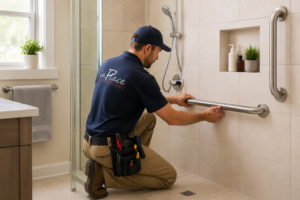
| Grab Bars | Stability support | $100–$300 installed | Pre‑discharge/immediate post‑discharge | Ontario Renovates; HATC |
| Roll‑In Shower | Eliminates tub barrier | $8,000–$15,000+ | Pre‑discharge/post‑surgery | Ontario Renovates; HATC |
| Raised Toilet | Easier transfers | $200–$800 | Immediate | Ontario Renovates; HATC |
| Walk‑In Tub | Safer bathing | $4,000–$12,000 | Post‑discharge w/ mobility limits | Ontario Renovates; HATC |
| Stair Lift | Mobility between floors | $3,500–$12,000+ | Post‑surgery or long‑term mobility loss | Ontario Renovates; HATC |
| Ramps | Step‑free access | $1,500–$6,000+ | Immediate | Ontario Renovates; HATC |
| Motion Lighting | Reduces fall risk | $100–$500 per location | Immediate | Ontario Renovates; HATC |
| Smart Alerts (Fall Detection) | Emergency response | $100–$500+ | Immediate | HATC (if part of renovation) HATC (device cost) |
Note: Costs are estimates and vary by home size, layout, and contractor.Source: CIHI. (2022). Hospitalizations for falls among seniors in Canada; PHAC. (2022). Fall prevention for older adults.
This guide provides a step-by-step approach to post-surgery home preparation, with resources tailored for residents of Ottawa, Canada’s Capital city. Read through comprehensive room-by-room preparation, funding options, non-invasive technology integration, and wellness strategies. Each section is meant to be strategic and practical, supporting recovering seniors and their caregivers.
Post‑Surgery Needs: Immediate vs Recovery vs Long‑Term
| Need Category | Examples | When Implemented | Typical Support |
|---|---|---|---|
| Immediate Safety | Grab bars, motion lights, clear paths | Upon discharge | Ontario Renovates; HATC; caregivers |
| Mobility Support | Walkers, canes, ramps, stair lifts | 1–4 weeks post‑discharge | Ontario Renovates; HATC |
| Daily Living | Accessible kitchen layout, elevated bed | 1–8 weeks | HATC; personal funds |
| Health Monitoring | Fall detection, medication reminders | Ongoing | HATC (device) |
| Wellness & Rehab | Physiotherapy, home exercises | Post‑discharge through recovery | Home care services; community programs |
| Long‑Term Accessibility | Kitchen redesign, community village planning | 3–12+ months | Ontario Renovates; HATC; personal planning |
Source: Public Health Agency of Canada. (2022). Healthy aging and fall prevention.
Turns out you are looking for long-term support?
Check out our Complete Guide to Aging-in-Place in Ottawa and. Ontario Renovates vs HATC [NOTE: link to articles 1.1 and 1.2] or click below the check out The City of Ottawa’s Older Adult Plan with more local information on age‑friendly community planning in Canada’s capital.
City of Ottawa – Older Adult Plan:
https://ottawa.ca/en/family-and-social-services/older-adults/older-adult-plan/older-adult-plan-background
Caregiver Guidance
Caregivers play absolutely crucial roles on the road to safe recovery:
- Create a structured daily routine including meals, medications, and exercises
- Monitor safety hazards such as loose rugs, clutter, and blocked pathways
- Communicate with healthcare providers regarding recovery progress
- Provide emotional support to reduce stress and promote healing
- Local Resource: Ottawa Caregiver Support Services offers training, respite care, and counseling for caregivers.
Local Ottawa Resource: Ottawa Caregiver Support Services offers counselling, training, and respite options.
Caregiver Support Resources (Guides, support, & community links)
Mental Health Caregiver Guide
https://www.ottawapublichealth.ca/en/public-health-topics/mental-health-caregiver-guide.aspx
Step 1: Pre-Discharge Planning
Collaborate with Your Healthcare Team!
Do not hesitate to ask questions!
Proactively seeking clarity gives you the confidence to support recovery, but it can help healthcare teams provide support tailored to your recovery.
Before you leave the hospital, ask about:
- Discharge Instructions: Ask all your questions! Make sure you understand medications, mobility limitations, wound care, and double-check any follow-up appointments, as well as applicable parasympathetic care and assistive devices.
- Physiotherapist Input: Receive guidance on safe mobility, proper transfer techniques, and/or targeted exercises.
- Occupational Therapist (OT) Recommendations: Identify home modifications, assistive devices, and/or accessibility needs.
📌 Ask the hospital discharge planner for a home safety checklist specific to your surgery type + many hospitals and community care providers offer rental equipment (temporary walkers, wheelchairs, commodes)!
Step 2: Assessing Your Home
Conducting a comprehensive evaluation of your living space before you leave for the hospital greatly reduces risks associated with recovery and the potential for delayed, interrupted, or even improper healing.
Room-by-Room Home Preparation
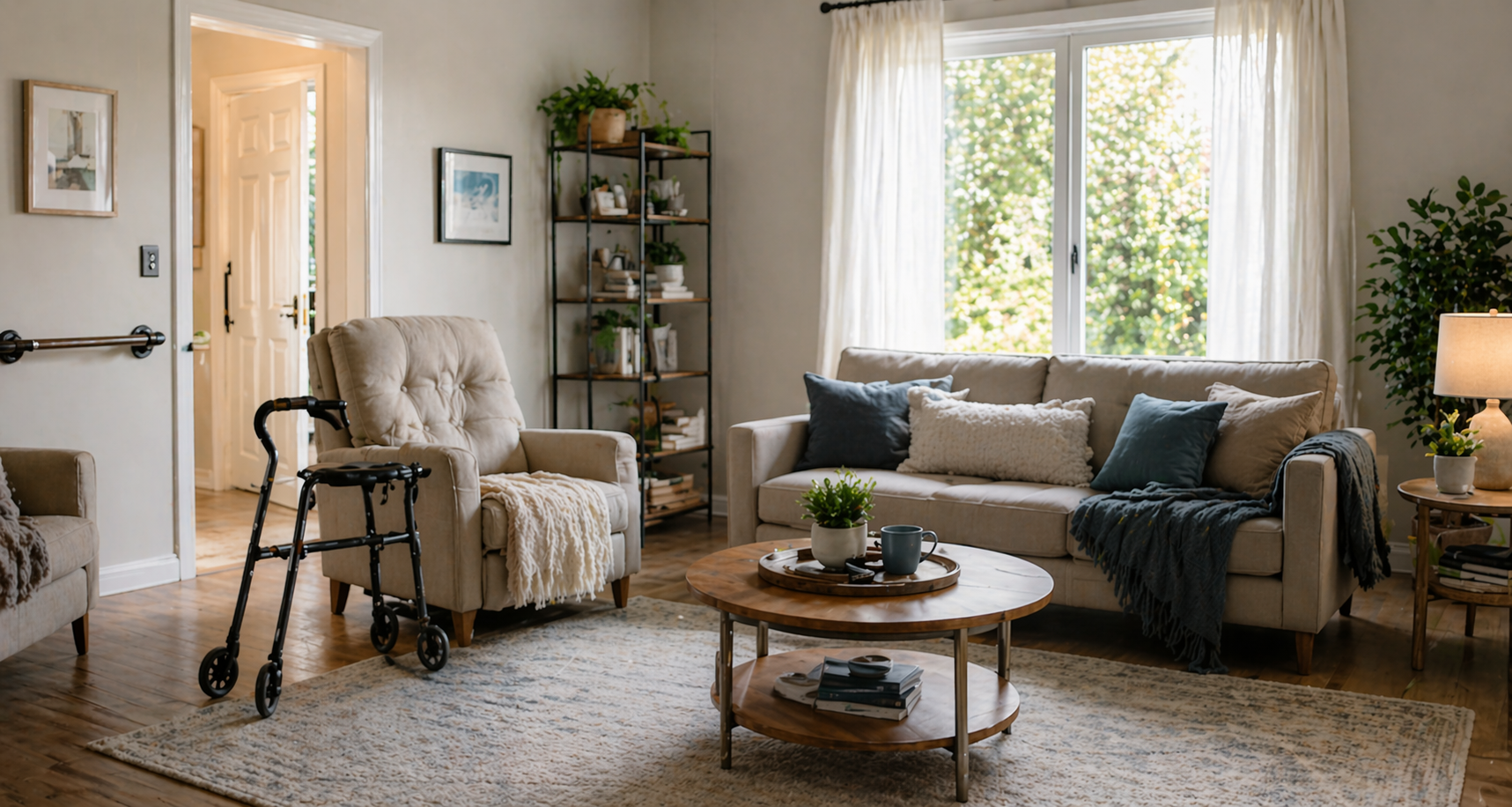
Living Room
- Pathway clearance: Minimum 36 inches wide for mobility devices
- Seating: Chairs with firm cushions, armrests, and stable legs
- Lighting: Motion-sensor and adjustable lamps to reduce glare and shadows
- Accessible surfaces: Tables for meals, drinks, medications
Bedroom
- Bed height: 20–23 inches from floor, or adjustable bed
- Lighting: Nightlights along path to bathroom
- Emergency access: Phone and personal alarm within reach
- Storage: Clothing, medications, and devices at waist to shoulder height
Kitchen
- Meal prep: Pre-prepped food or easy-access storage
- Appliances: Microwave or toaster at counter level
- Anti-slip mats: Reduce risk while standing
- Accessible layout: Minimize bending, reaching, and carrying heavy items
Bathroom
- Grab bars: Near toilet, shower, tub
- Walk-in or roll-in shower: Seat and hand-held shower head
- Raised toilet: Facilitates safe transfers
- Non-slip flooring: Essential for wet environments
Stairways
- Handrails on both sides
- Non-slip treads
- Stair lift if needed
- Lighting: Use bright lighting for stairs & motion sensors function correctly
Outdoor Areas
- Ramps: Gentle slopes and handrails
- Lighting: Motion-activated lights for night use
- Walkway maintenance: Snow, ice, or wet leaves managed by WinterSafe Ottawa
Check out below for Ottawa businesses in accessibility, renovation, or support service providers:
Home Renovation & Accessibility Contractors
| Business | Services |
| Rebuilding Together Ottawa | Volunteer‑based home repairs and modifications for low‑income seniors (varies by year/availability). |
| Safe Bath Solutions Ottawa | Bathroom accessibility renovations (roll‑in showers, grab bars, non‑slip flooring) |
| Accessible Kitchens Ottawa | Ergonomic kitchen redesigns for accessibility and aging in place |
| Stairlift Ottawa | Stair lift evaluations and installations (straight/curved) |
| Ottawa Accessibility Solutions | Ramps, handrails, widened doorways, hallway safety upgrades |
| Mobility Home Solutions | Bedroom modifications, assistive furniture, custom accessibility installations |
Maintenance & Seasonal Services
| Business | Services |
| WinterSafe Ottawa | Snow and ice removal on walkways, ramps, and driveways (critical for post‑surgery safety) |
Step 3: Prioritizing Immediate Post-Surgery Needs
The first 1–2 weeks after discharge are critical for safety, recovery, and avoiding any ER visits or hospital re-admission.
Prioritize these:
- Fall prevention: Remove loose rugs, clutter, and obstacles
- Mobility support: Walkers, canes, or crutches within reach
- Bathroom accessibility: Grab bars, shower seats, non-slip mats
- Medication management: Clearly labeled pills, dosette boxes, or automated dispensers
- Emergency planning: Phone within reach, medical alert device, and caregiver access
Post-Surgery Care Routines
Proper routines after returning home are essential for recovery and independence. These routines reduce complications, improve healing, and provide caregivers with a structured plan.
A holistic post-surgery recovery requires physical, mental, and emotional wellness support:
Physical Wellness
- Gentle walking and home-based exercises
- Physiotherapy as prescribed by OT or PT
- Balance and resistance training for fall prevention
Consider…
Daily Safety & Mobility Checks
- Morning inspection: Clear floors of obstacles, check assistive devices, test emergency alerts.
- Walking routes: Clear pathways for walker or wheelchair use.
- Bed-to-bathroom transitions: Monitor for fatigue and adjust as necessary.
- Medication adherence: Use pill organizers or automated dispensers to prevent missed doses.
Pain Management & Medication Monitoring
- Keep a pain log to track dosage and timing.
- Store medications in a labeled, accessible location.
- Set alarms or reminders for taking medications.
- Monitor for side effects and report to your physician promptly.
Post-Surgery Exercise & Rehabilitation
- Physiotherapy: Schedule home-based sessions or attend clinics such as Ottawa Physio & Rehab.
- Strength & mobility exercises: Gentle stretching, walking, or sit-to-stand exercises improve balance and prevent muscle loss.
Balance training: Tai Chi, light resistance bands, or OT-guided activities.
Be Active with the City of Ottawa!
You can view all the City of Ottawa’s list of local centres with older adult fitness activities & programs using the URL link below:
https://ottawa.ca/en/recreation-and-parks/older-adult-activities/seniors-centres
Mental & Emotional Health
- Social engagement via programs at Ottawa Seniors’ Centre
- Counseling or peer support for post-surgery anxiety
- Cognitive stimulation: puzzles, reading, or lifelong learning classes
Consider…
Community and Social Support
Recovery is not just physical; mental and social wellness matter, just as much (and sometimes, for some people, more).
- Join senior villages to access social programming, support groups, and wellness initiatives.
- Attend local classes or workshops at Ottawa Seniors’ Centre.
- Consider virtual social programs for remote engagement during early recovery.
City of Ottawa Wellness Programs & Memberships (Drop‑ins, activities, social/fitness programs)
City of Ottawa — Recreation & Parks – Older Adult Activities (Senior Centres)
https://ottawa.ca/en/recreation-and-parks/older-adult-activities/registered-programs-and-courses-older-adults
Nutrition & Hydration
- Adequate protein and calcium for bone and muscle recovery
- Small, frequent meals if mobility or appetite is limited
- Hydration monitoring for medication efficacy and healing
Consider…
- Meal preparation: Consider batch cooking or meal delivery services.
- Hydration: Keep water accessible throughout the day, particularly for post-surgery recovery.
- Dietary requirements: Follow healthcare provider recommendations for protein, calcium, and vitamins to support healing.
Rehabilitation & Wellness Programs (Ottawa)
| Organization/Program | Focus |
| Ottawa Physio & Rehab Clinics | Home or clinic‑based physiotherapy |
| City of Ottawa Recreation Programs | Low‑impact exercise classes for older adults |
| Wellness Programs | Community fitness, social engagement for seniors |
Home Care & Support
| Organization | Services |
| Ottawa Home Care Services | Professional in‑home care support |
| Ottawa Caregiver Support Services | Training, respite, counseling for caregivers |
| Ottawa Seniors’ Centre | Social programs, workshops, support groups |
| PharmaPlus Ottawa | Medication management services for seniors |
| Meals on Wheels Ottawa | Meal delivery services for post‑surgery nutrition support |
Technology Integration for Post-Surgery Safety
Smart home technology enhances safety, independence, and monitoring. Recommended solutions include:
- Motion-sensor lighting: Activates in hallways, bathrooms, and stairways.
- Medical alert systems: Wearable devices with fall detection and 24/7 emergency contact.
- Voice-activated devices: Operate lights, doors, heating, or appliances hands-free.
- Remote monitoring: Enables family or caregivers to track activity levels and recovery progress.
- Medication reminders: Automated pill dispensers or phone alerts reduce missed doses.
Technology Integration & Safety Systems
| Business | Services |
| SeniorTech Ottawa | Smart home installations: fall detection, motion lighting, voice‑activated systems |
| Smart Home Seniors Ottawa | Automated lighting, security systems, motion sensors |
BONUS: Funding & Grant Strategies
Renovations or assistive technology for post-surgery recovery can be costly, but several Ottawa-specific funding options exist. Here, we summarize program options ordered from municipal, provincial, and finally, federal. Read more about Ontario Renovates VS HATC Funding here! [NOTE: link to [[1.2]] ONREN VS HATC ARTICLE]
Municipal Support
- The City of Ottawa Seniors Support Services provides subsidies and guidance for accessibility upgrades post-surgery.
- Nonprofits like Rebuilding Together Ottawa offer volunteer-led home modifications for low-income seniors.
Ontario Renovates Program (Provincial via City/Municipality)
Provides grants or low‑interest loans for accessibility and safety renovations for eligible low‑ and moderate‑income seniors. Renovations include ramps, bathroom modifications, stair lifts, and other essential upgrades.
- Who qualifies: Seniors with low-to-moderate income needing home accessibility upgrades.
- What is covered: Grab bars, ramps, stair lifts, bathroom renovations.
- How to apply: Work with contractors familiar with the program for quotes and application guidance.
Seniors’ Home Safety Tax Credit (SHSTC – Provincial) (Note: Proposed in past; verify current status before use)
- A provincial tax credit model examined Ontario‑wide, differing from HATC federal credit.
Advice: always verify your up‑to‑date status with the Ontario government.
Home Accessibility Tax Credit (HATC – Federal)
- Tax credit to help seniors (65+) and persons with disabilities claim eligible renovation costs (labour + materials) on federal taxes.
- Eligible for modifications that improve accessibility, mobility, or safety.
Eligibility: 65+ or qualifying disability status; renovations in primary residence.
Source: Canada Revenue Agency. (2023). Home Accessibility Tax Credit (HATC). +URL
Registered Disability Savings Plan (RDSP – Federal)
- Long‑term savings plan with government matching grants (if eligible).
Not renovation‑specific but can fund accessibility costs.
Source: Government of Canada. (n.d.). Registered Disability Savings Plan. +URL
📌 Always document invoices, contractor quotes, and photos of renovations to maximize eligibility.
Conclusion Remarks
LandSeed’s Home Recovery Preparation Checklist
- Schedule a professional home accessibility assessment before discharge
- Prioritize renovations by urgency: Immediate → Medium → Long-term
- Integrate applicable smart home technology for safety, monitoring, and independence
- Apply for grants and funding: Ontario Renovates, HATC, municipal programs
- Optimize outdoor safety: ramps, handrails, lighting, snow removal
- Implement room-by-room modifications: bathroom, bedroom, kitchen, living areas, stairways
- Maintain daily routines: medication management, exercise, nutrition, hydration
- Schedule quarterly safety inspections and seasonal maintenance
- Foster community engagement and social support
- Support caregivers with guidance, respite, and communication plans
Further Resources for Ottawa Residents
Training, Community & Support Resources
Prevention of Falls in Older Adults e-Training – City of Ottawa
Free online course via e-learning module to aid in identifying risks associated with falls & putting prevention measures in-place.
e-Learning Module Online Course
Module Transcript .PDF
Housing, Fall Prevention, Recreation & Renovation Resources
City of Ottawa – Guide to Services & Programs for Older Adults
https://ottawa.ca/en/family-and-social-services/older-adults/guide-services-and-programs-older-adults/introduction
Neighbourhood Health & Wellness Hub – Ottawa Public Health
Drop-in services, info Sessions & free Programs
3‑1‑1 – City of Ottawa Info Line
Connects residents with services including Ontario Renovates & housing support info.
https://ottawa.ca/en/3-1-1
Compare & Contrast References
While each chart has been created to provide an easier, simple way to see all your options laid out, they reference and were informed by the federal, provincial, and municipal program details listed below:
Home Accessibility Tax Credit (eligibility & limits) — Canada Revenue Agency Line 31285
Canada Revenue Agency. (2025). Line 31285 – Home accessibility expenses. Government of Canada. https://www.canada.ca/en/revenue-agency/services/tax/individuals/topics/about-your-tax-return/tax-return/completing-a-tax-return/deductions-credits-expenses/line-31285-home-accessibility-expenses.html
City of Ottawa – Ontario Renovates Program (Homeowner)
City‑administered Ontario Renovates home repair & accessibility upgrades — eligibility, income limits, and contacts.
https://ottawa.ca/en/family-and-social-services/housing-and-homelessness/ontario-renovates-program/homeowner
Ottawa Public Health – Prevent Falls
City of Ottawa public health guidance on fall prevention and related home modifications.
https://www.ottawapublichealth.ca/en/public-health-topics/prevent-falls.aspx
City of Ottawa – Being a Caregiver (Caregiver Resources & Support)
References
Canadian Institute for Health Information
Canadian national site with downloadable PDF content for official hospitalization/fall statistics.
Hospitalizations, falls among seniors in Canada
Falls remain a leading cause of injury/hospitalization among older adults in Canada.
Seniors’ Falls in Canada: Second Report (PDF with national stats)
https://www.phac-aspc.gc.ca/seniors-aines/publications/public/injury-blessure/seniors_falls-chutes_aines/assets/pdf/seniors_falls-chutes_aines-eng.pdf
Surveillance report (fall hospitalizations & emergency department data)
Surveillance Report on Falls Among Older Adults
https://www.canada.ca/en/public-health/services/publications/healthy-living/surveillance-report-falls-older-adults-canada.html
Public Health Agency of Canada – Seniors’ Falls in Canada (Infographic & Report
PHAC publishes injury & hospitalization associated with falls, as well as fall intervention techniques, including identifying risk factors & prevention practices.
https://www.phac-aspc.gc.ca/seniors-aines/publications/public/injury-blessure/seniors_falls-chutes_aines/assets/pdf/seniors_falls-chutes_aines-eng.pdf
Statistics Canada Ottawa Demographic profile
Ottawa demographic data is accessible through the official census profile tool.
Note: this URL link opens to the official StatsCan profile for Ottawa & opens in a structured “Census Profile” view.
Canada Mortgage and Housing Corporation (CMHC)
CMHC offers housing safety guides and publications for accessible housing & aging-in-place.
Creating Accessible, Inclusive Housing with CMHC
https://www.cmhc-schl.gc.ca/lp/cmhc-accessible-housing
Guides to designing your accessible home.
CMHC Publication Library — Senior Housing: Low- and no-cost modifications for accessibility
https://www.cmhc-schl.gc.ca/professionals/industry-innovation-and-leadership/industry-expertise/senior-housing/low-and-no-cost-modifications-for-accessibility
Housing adaptation guides are accessible via CMHC’s seniors/accessible housing portals, which link to home adaptation standards, tips & tricks.
City of Ottawa
The City of Ottawa consolidates local programs for seniors, falls prevention, caregiver support, and community activities.
Government of Ontario
Programs, services, and guides for seniors and caregivers, as well as financial help to modify your home.
Ontario Renovates Program Info & Guidelines
- Government of Ontario – Health and wellness: A guide to programs and services for seniors – Financial Help to Modify Your Home
- Ontario Priorities Housing (OPHI): Ontario Renovates Component
- https://www.ontario.ca/document/guide-programs-and-services-seniors/home-and-housing
Access Ontario Renovates in the City of Ottawa at ottawa.ca.
World Health Organization – Age-friendly World & Global Network
The following link to official WHO global age‑friendly cities network and resources for creating age‑friendly environments including housing, mobility, and community planning. WHO Age‑friendly World is an international authority on age‑friendly environments.
Age‑Friendly World
- WHO Age‑Friendly World — About
- https://extranet.who.int/agefriendlyworld/about-us/
- Age-Friendly in Practice
- WHO Age‑Friendly World — Age-friendly in Practice
- https://extranet.who.int/agefriendlyworld/age-friendly-practices/
- Age-Friendly Global Network
- WHO Age‑Friendly World — Global Network
- https://extranet.who.int/agefriendlyworld/who-network/
- Age-Friendly Resource Library
- WHO Age‑Friendly World — Resource Library
- https://extranet.who.int/agefriendlyworld/resources/ https://www.ottawapublichealth.ca/en/public-health-topics/prevent-falls.aspx#course